Stars of Polar Night – Exhibition by Esther Horvath
Opening: October 24, 2024, Thursday, 6 pm
Greetings by István VIRÁGVÖLGYI artistic director, Capa Center
Opening remarks by Lars Ole SAUGNES managing director, Kings Bay AS
Ingrid KJERSTAD research coordinator, Norwegian Polar Institute
Opening speech by Tamás VITRAY ifj. editor in chief, National Geographic Hungary magazine
Venue: Robert Capa Contemporary Photography Center
8 Nagymező Street, 1065 Budapest
Exhibiting artist: Esther HORVATH photographer, Alfred Wegener Institute, Helmholtz Centre for Polar and Marine Research
The curator of the exhibition: Katalin KOPIN art historian
The exhibition is open:
October 25, 2024 – February 9, 2025
Tuesday–Friday: 1 pm – 6 pm
Saturday–Sunday: 10 am – 6 pm
Closed on Mondays and holidays.
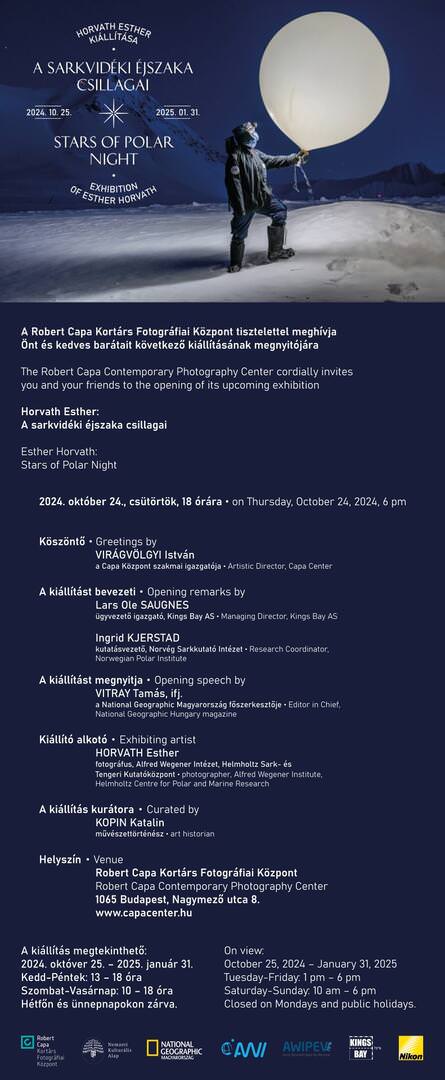
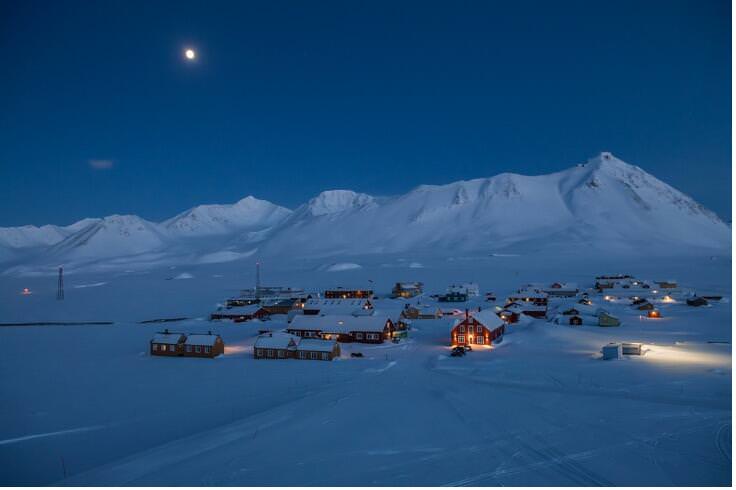
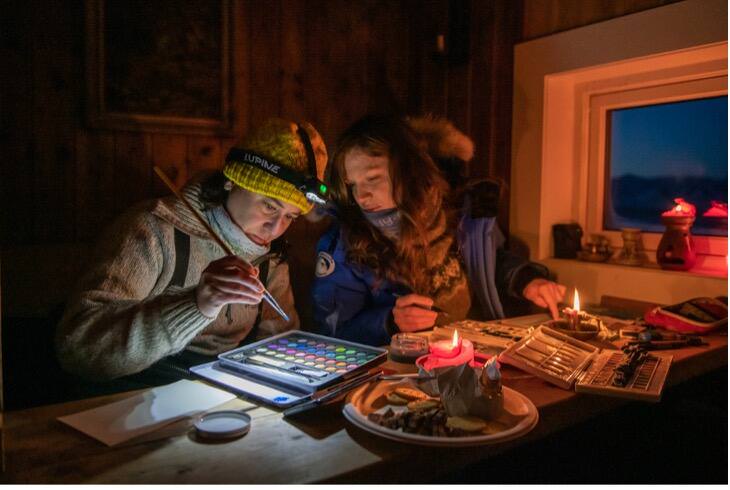
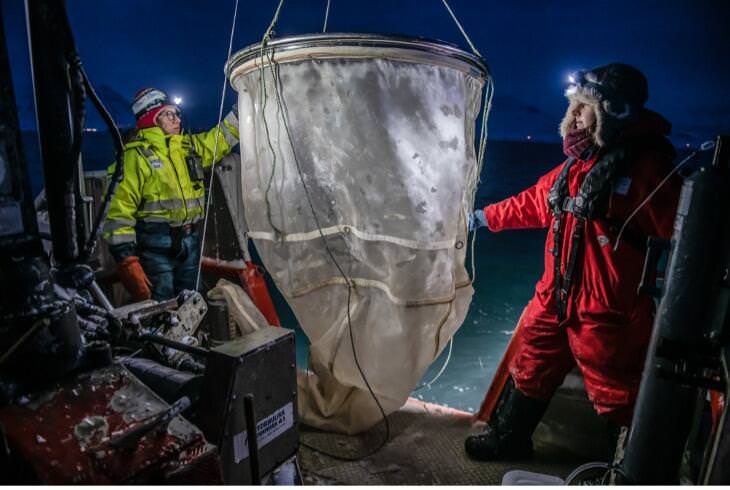
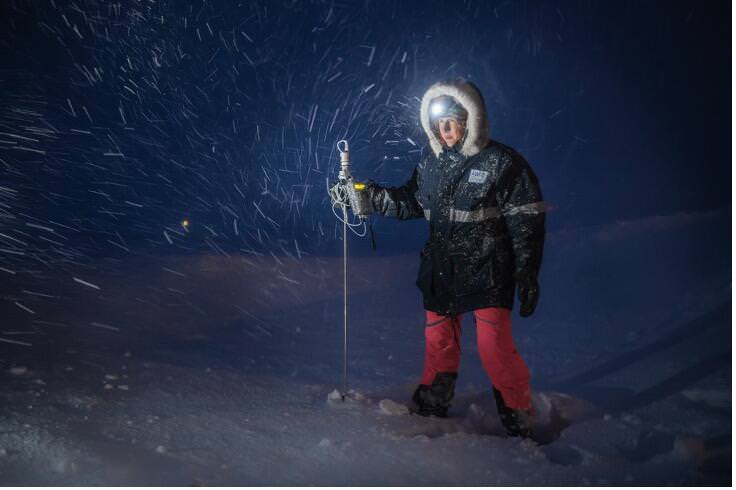
Esther Horvath, a photographer, has been focusing on documenting the Arctic climate research since 2015. Since 2019, she has been working in Ny-Ålesund, at the world’s northernmost international scientific research station, which involves ten countries and is located in the Norwegian Svalbard Islands. Svalbard is the epicentre of global warming, where the average winter temperature has risen by 6-8°C since 1991, at a rate much faster than anywhere else on the planet. There, more than four months of the year are dominated by the darkness of the Arctic winter. The exhibition Stars of Polar Night presents narratives and visual series of everyday life and scientific research in the polar night. The documentary collection tells the story of how scientists – in spite of the harshest environmental conditions, including blizzards and temperatures as low as -30°C – reveal connections that significantly contribute to a better understanding of the changes on our planet. In addition, the photographer also represents everyday life at the research base, which is accessible only by boat or plane and where no tourists are allowed, only researchers. This closed world is explored through her sensitive observations, offering insight not only into the research processes but also into the personalities and human aspects of the dedicated scientists working there. A key component of the project is the portrait series called Women of Arctic Science,which aims to inspire the next generation of female scientists and explorers by featuring the lives, motivations, and work of female researchers.
Short Biography
Esther Horvath is a photographer at the Alfred Wegener Institute Helmholtz Centre for Polar and Marine Research, a National Geographic Explorer, and a Fellow at the International League of Conservation Photographers. She won the World Press Photo Award in the Environmental Single category in 2020. In 2022, she received the Infinity Award from the International Center of Photography (ICP) in New York. In 2024, her work in science, conservation, education, technology, and storytelling was acknowledged by the National Geographic Wayfinder Award.
She was born in Sopron and received her master’s degree in economics from the University of Western Hungary. Following her passion for photography, she moved to New York in 2012 to study at the ICP, where she graduated in documentary filmmaking and photojournalism. She lived in New York for six years before moving to Germany in 2018, where she currently resides.
She has documented twenty-four scientific expeditions in the Arctic and the Antarctic. In 2019-20, she participated in the MOSAiC expedition, the largest scientific expedition ever conducted in the Arctic Ocean, and the photographs taken there have been published in herbook by Prestel Verlag. Esther Horvath’s work has been published by National Geographic, The New York Times, GEO, Stern, TIME, and The Guardian, among other magazines.