
Opening speech by Zsolt Petrányi
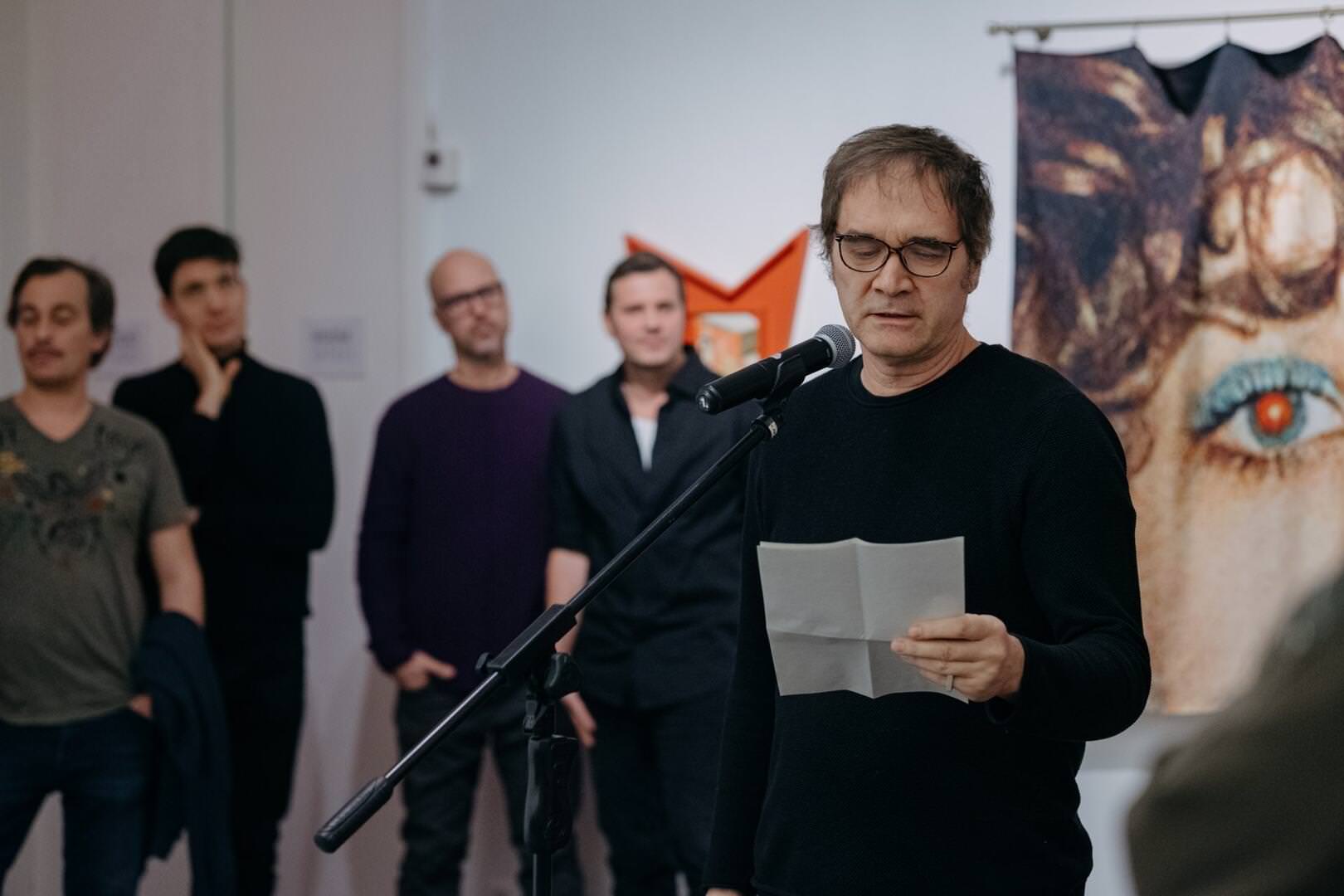
Dear Guests,
in 2005, a touring exhibition was held here in Budapest as well, in the Ludwig Museum, which was called „Euro Visions”. This was an artistic contribution of the Magnum agency to the new members of the European Union, the East European countries. Magnum photographers got a stipend to choose one of the countries and to spend their time there and create a series describing their impressions. Patrick Zachmann was in Hungary, and Mark Power in Poland. We all reacted suspiciously to the project, as we felt a kind of colonization by not been asked our opinion about how we see ourselves, and what would we underline as characteristics in 2005 as new members of Europe. All the members of this project remained definitely outsiders in the project.
In the introduction of the catalogue of this exhibition, Diane Dufour and Quentin Bajac quote Henri Cartier-Bresson’s series, Europeans, as a reference. Bresson, travelling through Europe in different decades wanted to express a common identity which is related to our confusing history with two cataclysms in the twenty’s century. What is a fact, is that if we watch culture history, Europe has a common background, which played a central role in a global perspective as well in the end of the ninetieth century, the age of global modernisation. But Cartier-Bresson’s viewpoint as many others was based on a common believe in the power of photographic image, namely that it can express humanistic qualities, moments of life wherever in Europe, connecting nations, countries and different classes.
For me, the position of Robert Capa is more calling, not just because we are here in the Capa Center, but because when he travelled to the Soviet Union or in Hungary after the second world war, he certainly had a local experience about a lifestyle or a perception of life. As a teenager in Hungary where he lived until 1931, he experienced not just the negative effects of the German oriented political climate, but also the suffocating atmosphere of being Jewish in Hungary. From his perspective, his return to East Europe was also a psychological confrontation of how the world had been changed, and how people live in a communist regime. For me, this aspect of personal involvement in local history is sincere and more inspiring, than Cartier-Bressons.
My generation, and myself, as curator, after the fall of the Iron Curtain, and the drastic political and more drastic economical changes, witnessed the period of the nineties, when the identity of the East-Europeans was in the focus of globalinterest and also, Europewide a comparative topic with heavy conclusions. For us, the new enterprises with the dream of “fast money” were controversial as it went with new visual symbols like the mobile phone, called here “Jerk-phone” or western cars, and ugly new houses. Money and dexterity became the new values, where the intelligentsia had no enforcement field. The fast, dynamic location of entrepreneurs became contradicted with behaviour of the socialist period, where labour was something most of the people wanted to get away with.
It’s not by chance that in Poland and in Hungary as well, in the nineties and in the first years of the millennium the so called “new documentarism” was a favourable genre in photography to document and to reveal these changes of society and the whole environment. The new generation of artists wanted to describe their identity by describing their outsider position within the context of corruption, new poverty, new richness, underworld in the era of wild, wild capitalism.
Meanwhile, as our countries became more established in the first decades of the millenium the descriptive documentation of the never loosing ties with visuals and the atmosphere of the past became common sense, the next generation of photographers raised, who were more enthusiastic about symbols, inner meanings, and values less visible in our societies. For them, identity became something which was based on a local life experiment instead of a comparative, critical attitude. New aspects were introduced, like feminist issues, deeper analyses of personal fate, career path models, rural life, new approaches of ethnical issues, and natural environment.
The current exhibition in the Capa centre is going further and presents identifications and artistic concepts of the present. The artists seem to overcome many discriminative indicators about being “East European” or Polish or Hungarians, but still we, locals, can feel in their interest and approaches the consequences of a past, what more of them knows now just from the descriptions of their parents.
The six “chapters” of the exhibition are relevant choices. The “Transition” describes the never-ending process of re-establishing the loss of forty years in the communist regime, what destroyed the basics of our societies. The ideology could not replace a valid system of values underlining the importance of culture, tradition and family connections. The “Space” is relating us to the architectural and natural environments, what is characteristic and special, and relates us to visual culture, it’s tradition and its effects to the present. The “Identity” is the core of how we see ourselves, how we think and how we relate ourselves to the rest of Europe, the “west”, and also our position in the 21.th century. The “Spirituality” is an interesting factor in the Jewish Christian tradition, where not just the religion, but local believes and customs, rituals plays an important role. The “Grotesque” and how is explained with the expression “Eastern European absurdism” is another key to understand us, as the bitter humour, scepticism, and joy of life plays an important role in every days visuality, but also it effects how we solve problems: sometime in an absurd way. Finally, the “Post-nostalgia” is the way we remember the past and tries to see the positive side of the transition and the changing process of our societies.
If you ask me, which is the work in the exhibition which express the most this aspects, I would highlight Ada Zielinska’s “Piromaniacs manual” a burning limousine in an empty field, surrounded by smoke, greyness and emptiness. This piece expresses a kind of pessimism, a kind of disappointment, where the dreams of luxury, richness and the wish to became like “America” just fade away in the reality of the present, where political and power games destroy the common will to build a world comfortable and positive not just for all of us, but also for the next generation. But I do not want to close my introduction with such a negative remark, just using this image to restore hope and a positive approach to the future.
With this final comment I open the exhibition