
Opening speech by Katalin Gyöngyi Pál
The work of André Kertész fundamentally changed the history of vision and photography in the 20th century by showing us the world in a new way. Anniversaries such as this one, the130th anniversary of the photographer’s birth, are always a good opportunity to reassess thelegacy of a particular oeuvre. Homage images dedicated to Kertész are often found on variousblogs or image-sharing platforms, and his legacy is a popular subject among amateurphotographers, but many professional photographers have also paid homage to the vision thattouched them in Kertész’s oeuvre (e.g. Péter Herendi’s Hommage a Kertész, MFM, 1997). Anywhere in the world if one studies the craft of photography, and if the person is sufficientlydedicated, he/she will certainly learn about and from the works of Kertész. The question is mainly which works are touching that person.
The number of his iconic images alone is awe-inspiring. It is enough to mention the titles of the photographs in order to inmediately make them appear in our mind: for example, The Swimmer Underwater (1917), The Dancing Faun (1919), The Fork (1928), several self-portraits, the distortion series (1932/33), the late Polaroid series (c.1980), and so on. Kertész once said: „… I never document, I always interpret my images (…) I interpret what I feel at a given moment (…) In photography, you have to feel rather than see.” Indeed, each of hispictures is a deeply personal interpretation of the world, full of sensitivity, clarity, precisionand harmony of composition. Sándor Márai writes the following on his oeuvre: „In a cutlery, a matchbox, a banal street corner, he sees something that I never see…, his is not aiming fornaturalistic fidelity but to capture the context behind the material, to immortalize the form„. No wonder, then, that aesthete David Seamon sees in his photographs the approach of Merleau-Ponty as described in The Phenomenology of Perception.
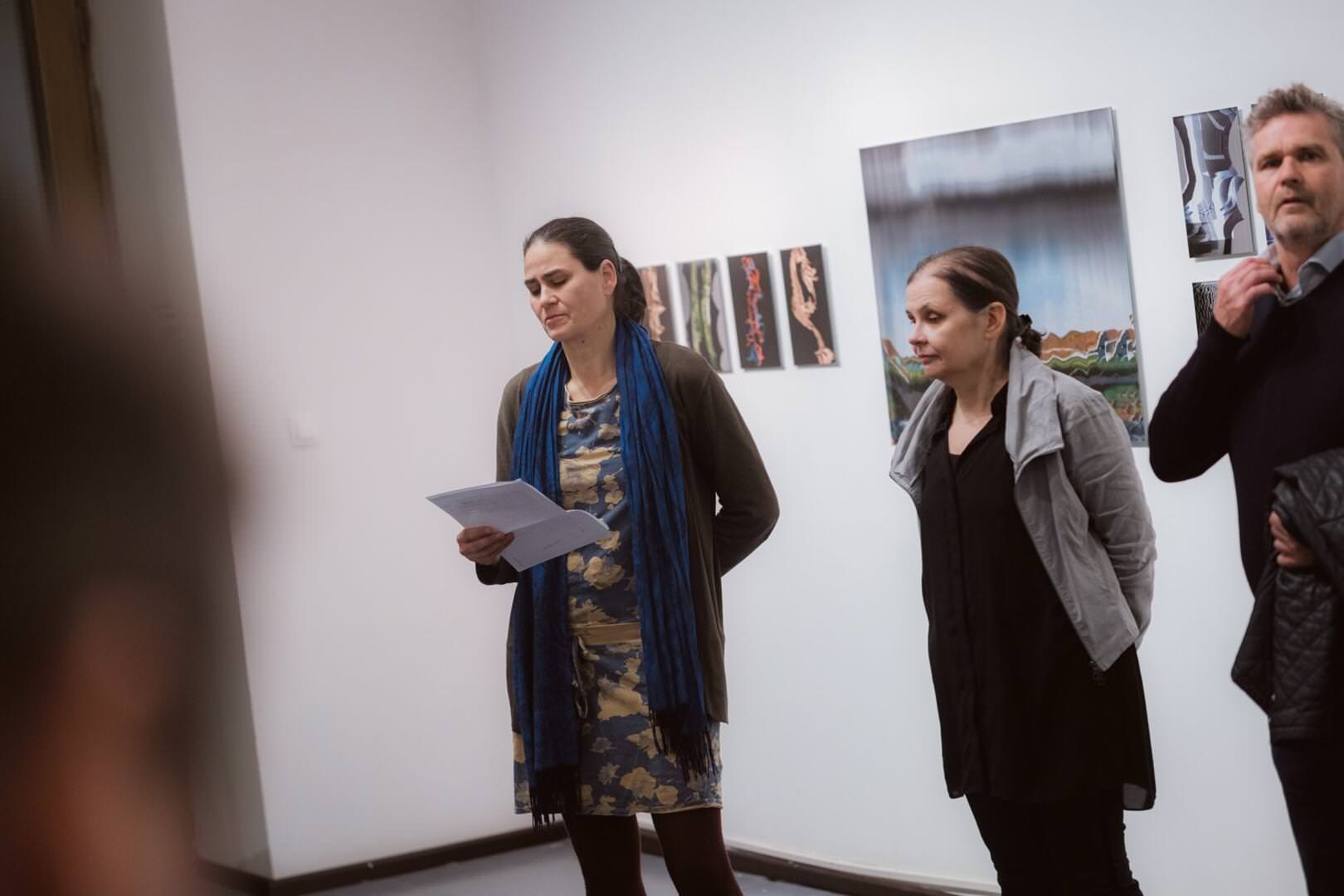
The exhibition here shows the impact of Kertész’s images on the current growing upgeneration of photographers, both recent graduates and current students of the Rippl-Rónai Art Institute. We can see traces of iconic images and series, traces of the beauty of everydaypresence distilled into abstraction and self-expression. In Kertész’s images the suspendedtime, vibrates, despite the fact that the camera itself, thanks to its mechanics that makes theexposure in the split of a second, confronts us with a unit of time that is beyond human understanding. The camera is a symbol of the replacement of time cyclically experiencedthrough nature, by the precisely chronometric time of an external clockwork that we handcuffe volontary to our pockets or arms. Kertész’s images go against this rushing time, and something of their timelessness seeps into the decisive moments on display in the exhibition.
According to Roland Barthes, myths are created by the intersection of ideas, stories, ideologies, to which each new narrative, each new transformation, each reinterpretation addsand legitimizes. This exhibition is also a continuation of the myth of Kertész, while at thesame time it is an important step in the exhibitors‘ own myth-creating process. I wish for ourfresh graduates and the current students to be able to redefine their own photographic careerson their path as Kertész did, with the same dedication, openness, humility, experience of presence and joy.